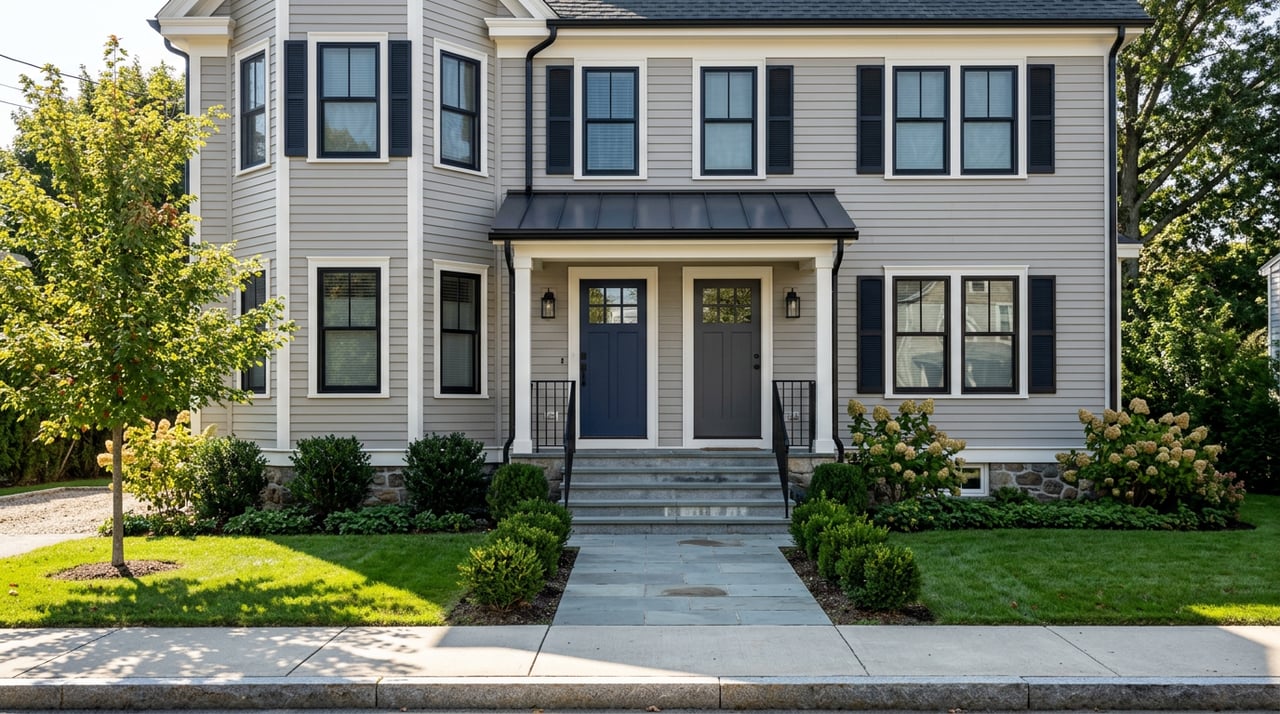
Thinking about buying a duplex or triplex in Carmel Hamlet to build steady income and long-term equity? You are not alone. The Town of Carmel is a popular base for commuters and area professionals, and small multi-family homes can be a smart entry point. This guide gives you a clear path to get started, from rent benchmarks and zoning checks to a simple pro forma and financing options. Let’s dive in.
Why Carmel Hamlet for small multifamily
Carmel Hamlet sits within the Town of Carmel in Putnam County and functions as the county seat, which helps anchor steady local housing demand. The area skews heavily owner-occupied, with the Town of Carmel’s owner-occupied housing rate around 85 percent in recent Census estimates. That means fewer small multi-family buildings are available compared to dense urban markets, and rental supply is tighter. A tighter supply can support demand and pricing when you select the right property and manage it well. You can confirm local context using the Town of Carmel QuickFacts from the U.S. Census Bureau.
For rents, start with HUD Fair Market Rents (FMRs) as a conservative baseline. HUD publishes county and ZIP-level FMRs every year. Putnam County’s two-bedroom FMR has been in the low to mid thousands, which gives you a grounded starting point for projections. Always check the latest figures on the official HUD page and then compare them with recent active rental listings for similar unit sizes. Using the lower of the two is a practical way to underwrite with a margin of safety.
- Reference for conservative rent benchmarks: review the current HUD Fair Market Rent dataset.
- Local context on ownership share: see the Census QuickFacts for the Town of Carmel.
Property types and zoning basics
In Carmel Hamlet and the wider Town of Carmel, you will see many single-family homes and a smaller number of two to four unit properties. Some multi-family buildings started as single-family homes and were later converted. Others are purpose-built duplexes. The Town’s zoning code also addresses accessory dwelling units (ADUs) by special permit in certain single-family zones. ADU approvals typically require owner-occupancy and compliance with building and health codes.
- To review the Town’s ADU and residential rules, see the Town of Carmel zoning code summary.
From a permitting point of view, a legal two-family often moves faster than a larger conversion that needs a full site plan or special use review. In some cases, detached one and two family dwellings are treated differently than larger apartment uses. Before you make an offer, verify the current legal unit count and the approvals on file, and ask the Town whether any changes you plan would trigger a permit or board review.
Your first municipal stop should be the Town of Carmel Building Department. They can confirm permit history, Certificates of Occupancy, and whether a parcel sits in a water or sewer district. Many homes rely on septic systems. If a property is not on town sewer, you will need to confirm septic capacity with the Putnam County Department of Health before you assume an accessory or added unit is possible.
- Start with the Town’s Building Department page for permits, inspections, and CO questions.
- For septic and water approvals referenced in the code, see the zoning summary and consult the Building Department about County Health sign-offs.
Due diligence checklist before you write an offer
Use this list to speed up your evaluation and reduce surprises.
Documents to request
- Current rent roll, all leases, and the security deposit ledger. Ask for payment history if the seller claims rental income.
- Recent utility bills, the most recent town and county property tax bill, insurance declarations, and repair receipts.
- Any open code violations or enforcement actions. Confirm with the Town’s Building Department.
Physical and technical inspections
- Full home inspection that covers structure, roof, electrical, plumbing, and HVAC. Choose an inspector familiar with older wood-frame multi-family.
- If the home predates 1978, review lead paint disclosures and consider testing. For properties on septic, schedule a septic inspection and confirm capacity with the County Health authority.
- Check FEMA flood maps and discuss flood insurance with your insurance agent. Flood exposure can change premiums and lender requirements.
Legal and compliance checks
- Verify the number of legal dwelling units. Make sure there is a Certificate of Occupancy for each unit. An unpermitted unit is a red flag.
- Confirm the zoning district, allowed uses, parking ratios, and setbacks for the parcel. See the Town zoning summary and confirm details with the Town.
Operating costs to include in your pro forma
Below are common rules of thumb. Replace them with property-specific quotes and bills as soon as you have them.
- Vacancy allowance: 5 to 10 percent of gross scheduled rent.
- Property management: about 8 to 10 percent of collected rent for small multi-family.
- Repairs and maintenance: 5 to 10 percent of gross rent for routine items.
- Capital expenditures reserve: for example, $250 to $500 per unit per year as a starting point.
- Insurance: landlord policy rates vary. Get local quotes, especially if there is flood exposure.
- Property taxes: use the current parcel bill. For reference and contacts, see the Putnam County Real Property/Assessor page.
Quick math you can use
- Gross scheduled income = sum of each unit’s market rent.
- Effective gross income = scheduled income × (1 − vacancy rate) + other income.
- Net Operating Income (NOI) = effective gross income − operating expenses, excluding loan payments.
- Cap rate = NOI ÷ purchase price.
- DSCR (Debt Service Coverage Ratio) = NOI ÷ annual debt service.
A simple example pro forma
This is an illustration only. Use current HUD FMRs and your verified tax and insurance figures to model your target property.
- Building: 2 units, each a 2-bedroom
- Conservative market rent assumption: $2,200 per unit per month using HUD-style benchmarking. Check the current HUD FMR dataset to validate.
Income assumptions
- Gross scheduled income: $2,200 × 2 × 12 = $52,800
- Vacancy at 7 percent: $3,696
- Effective gross income: $52,800 − $3,696 = $49,104
Operating expense assumptions
- Management at 8 percent of collected rent: $3,928
- Repairs and maintenance at 8 percent: $3,928
- Capital reserve: $300 per unit per year = $600
- Insurance (example placeholder): $2,000 per year. Replace with a local quote.
- Property taxes (example placeholder): $10,000 per year. Replace with the actual bill from Putnam County Real Property.
- Total expenses: $3,928 + $3,928 + $600 + $2,000 + $10,000 = $20,456
NOI and cap rate
- Projected NOI: $49,104 − $20,456 = $28,648
- If the purchase price is $550,000, the cap rate would be about 5.2 percent. Cap rate = $28,648 ÷ $550,000.
DSCR example
- If annual debt service is $24,000 based on your loan terms, DSCR = $28,648 ÷ $24,000 = 1.19. Lenders often look for a DSCR above 1.15 to 1.25 on small multi-family, but actual requirements vary by program.
This quick run shows how sensitive returns are to rent, taxes, and insurance. Use conservative rent inputs and confirm fixed costs early.
Financing options and lender questions
You have several pathways to finance a 2 to 4 unit purchase. The right one depends on whether you will live in one unit, your credit and reserves, and the building’s income profile.
- FHA 203(b) and related FHA programs: FHA allows owner-occupied financing for 1 to 4 units, often with a lower down payment than conventional loans. Three and four unit properties have extra tests, such as self-sufficiency and reserve requirements. Review highlights and confirm with an FHA-approved lender using this FHA 203(b) overview.
- Conventional and portfolio loans: Many lenders offer conventional financing for 2 to 4 units with higher minimum down payments and reserve requirements than single-family. Some investors also use DSCR or other non-QM options when traditional debt-to-income calculations are a constraint.
Key questions to ask a lender
- Can you use rental income to qualify, and what documentation is needed? Will the lender count current leases or the appraiser’s market rent estimate?
- Will the loan be treated as owner-occupied or investor financing, and what is the maximum loan-to-value for each?
- What are the required reserves and credit thresholds for 2-unit versus 3 to 4 unit properties?
- How will the appraiser handle projected rent for underwriting?
- What is the estimated monthly payment and expected DSCR under your pro forma?
Bring these items to a pre-approval meeting
- Two years of tax returns and recent pay stubs or income statements.
- Proof of down payment and reserves.
- Copies of existing leases if the property is tenant-occupied.
- A one-page pro forma that shows your rent assumptions, vacancy, and a summary of expenses.
How a local agent adds value
A strong local agent saves you time, reduces risk, and improves your outcome.
- Pull targeted MLS comps for 1 to 4 unit properties and assemble apples-to-apples rent comps for the hamlet.
- Check permit and Certificate of Occupancy history and scan for open enforcement quickly with the Town’s Building Department.
- Connect you with inspectors who know septic systems, older electrical, and heating systems common in the area.
- Help you build a pro forma with three rent cases, including a conservative HUD FMR scenario, so you can stress test returns.
Local contacts you will use
- Town of Carmel Building Department, Carmel Town Hall, 60 McAlpin Ave, Mahopac, NY. Start here for permits, COs, and inspections. Visit the Building Department page for current hours and contacts.
- Putnam County Real Property/Assessor, Putnam County Office Building, 40 Gleneida Ave, Carmel, NY. Use this office to pull parcel tax bills and maps. See the Putnam County Real Property overview for contact information.
- Town of Carmel Zoning Code, including ADU and parking provisions. Review the zoning summary and confirm parcel specifics with the Town.
- HUD FMR dataset for conservative rent benchmarks. Check the HUD FMR page for the most recent year.
- For owner-occupants, review New York State STAR information to understand potential school tax relief. See the NY STAR comparison for Putnam County municipalities.
A 4-step path to your first duplex
- Step 1: Ask your agent to pull recent closed sales for 2 to 4 unit properties in Carmel Hamlet, gather current rental listings for comps, and confirm zoning for your target parcel with the Town’s Building Department.
- Step 2: Build a quick pro forma using three rent cases: current owner rents, market comps, and HUD FMR. Include vacancy, management, maintenance, taxes, and insurance.
- Step 3: Schedule a lender consult focused on whether rental income will count for qualification, owner-occupancy rules, and reserve requirements. Bring leases or rent evidence.
- Step 4: Once you identify a property, book a general home inspection, schedule a septic review if applicable, request an insurance quote, and print the parcel’s tax bill from the county.
Ready to explore duplexes in Carmel Hamlet?
If you want a clear plan for finding, underwriting, and closing on a 2 to 4 unit property in the Town of Carmel, we can help you move fast and make smart choices. From comps and rent analysis to permit checks and a lender-ready pro forma, our team brings an investor-friendly approach with hands-on local guidance. Start a conversation with the RE/MAX Premier Team to map your next steps.
FAQs
What makes Carmel Hamlet promising for small multifamily?
- The Town of Carmel has a high share of owner-occupied homes, which limits small multi-family supply and can support rental demand. Use HUD FMRs and fresh local comps to underwrite conservatively.
How do accessory dwelling units (ADUs) work in the Town of Carmel?
- The zoning code allows accessory apartments by special permit in certain zones, often with owner-occupancy and health and building code compliance; confirm details with the Town’s Building Department and the zoning summary.
What rent should I plug into my underwriting if I lack comps?
- Start with the current HUD Fair Market Rents for Putnam County as a conservative baseline, then cross-check with current like-kind listings and choose the lower figure.
What inspections are critical for homes on septic in Carmel Hamlet?
- Schedule a septic inspection and confirm capacity with County Health authorities, along with a full home inspection for structure, electrical, plumbing, and HVAC; verify permits and COs with the Town.
Can I use FHA financing for a 3 or 4 unit if I live in one unit?
- FHA programs can allow owner-occupied 1 to 4 unit purchases, but 3 to 4 unit properties have extra tests and reserve requirements; review this FHA overview and confirm specifics with an FHA-approved lender.
How do I find my property tax amount in Putnam County?
- Pull the parcel’s current bill through Putnam County Real Property; start with the county assessor overview and follow the instructions to locate your property’s record.
